What is Jam?

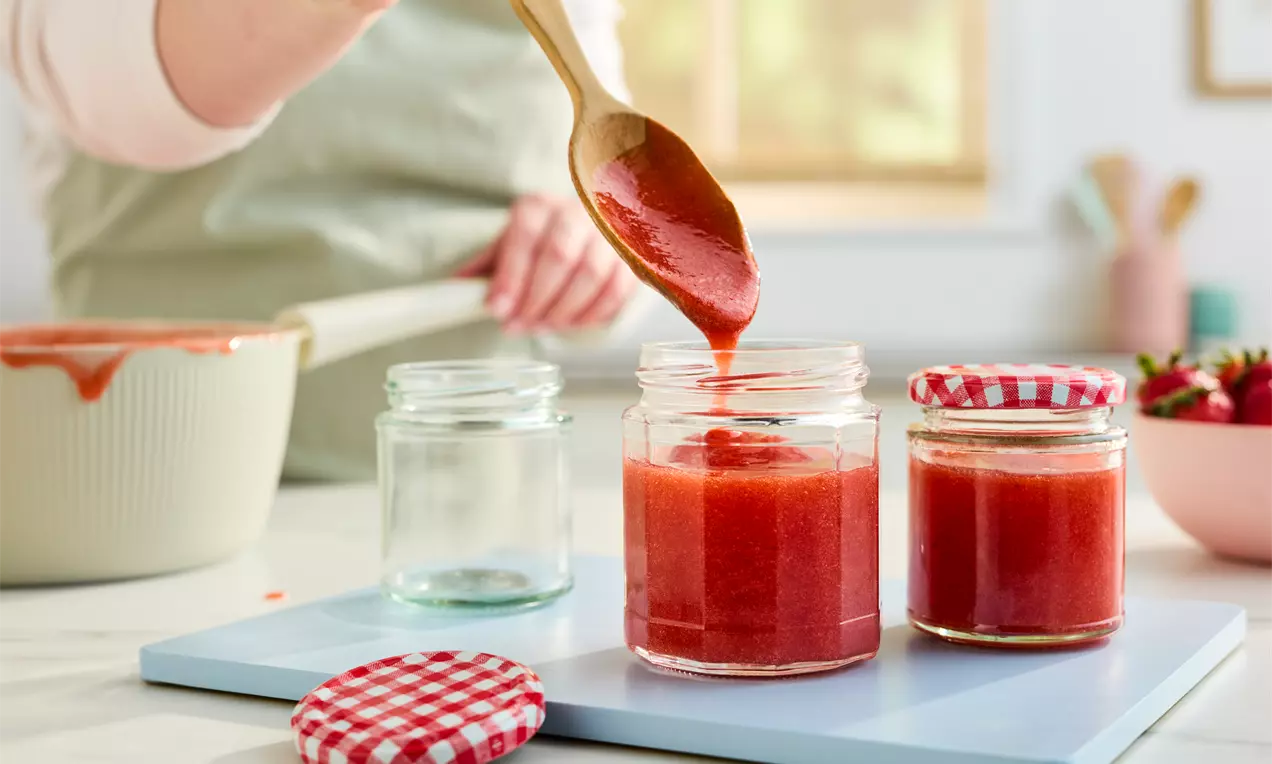
How to Make Jam
Making your own jam is a fun way to preserve fruit and create delicious spreads. Here’s our simple guide for beginners.
Jam is a sweet jelly-like spread which is made by cooking fruit with sugar and sometimes pectin or lemon juice until it thickens. It is commonly used on bread, toast, scones, or as a filling in cakes and pastries.
How to Make Jam
Before you start to make Jam here is some things you MUST know:
How to Choose the Right Fruit
Choosing the right fruit is important when making jam.
- Ripe and In Season Fruit- this is best flavour and natural sweetness.
- Soft fruits- these include berries or plums which cook down quickly; firmer fruits like apples or pears may need a bit longer to boil down into a jam.
- Overripe fruit- Should not be used as this is it can spoil the jam and effect the overall texture and flavour
How to Balance Sugar and Pectin
Sugar will help to preserve the fruit, add sweetness, and helps set the jam. Whereas Pectin and Lemon Juice: natural or added, helps to thicken the jam.
Tip: Some fruits (apples, blackcurrants, citrus) are high in natural pectin; others (strawberries, cherries) may need extra pectin for a firm set.
How to cook Jam to Perfection.
- Make sure that you use a pan big enough for the jam. A large, heavy-bottomed pan will help prevent scorching the jam.
- Making sure you stir frequently, especially toward the end of cooking as this will prevent burning.
- Make sure that you boil until the jam reaches the setting point (approx. 105°C / 220°F) or use the plate test: a small spoonful on a cold plate should wrinkle when pushed.
Recipe
Ingredients
1 kg fresh fruit (strawberries, raspberries, plums, etc.)
800g granulated sugar or Jam sugar (adjust to taste and fruit sweetness)
2–3 tablespoons lemon juice (for acidity and setting)
Optional: pectin, spices, or flavourings
Equipment
- Large, heavy-bottomed saucepan
- Wooden spoon or heatproof spatula
- Sterilized jars with lids
- Potato masher or food processor (for smooth or chunky jam)
- Candy thermometer (optional but helpful)
Instructions
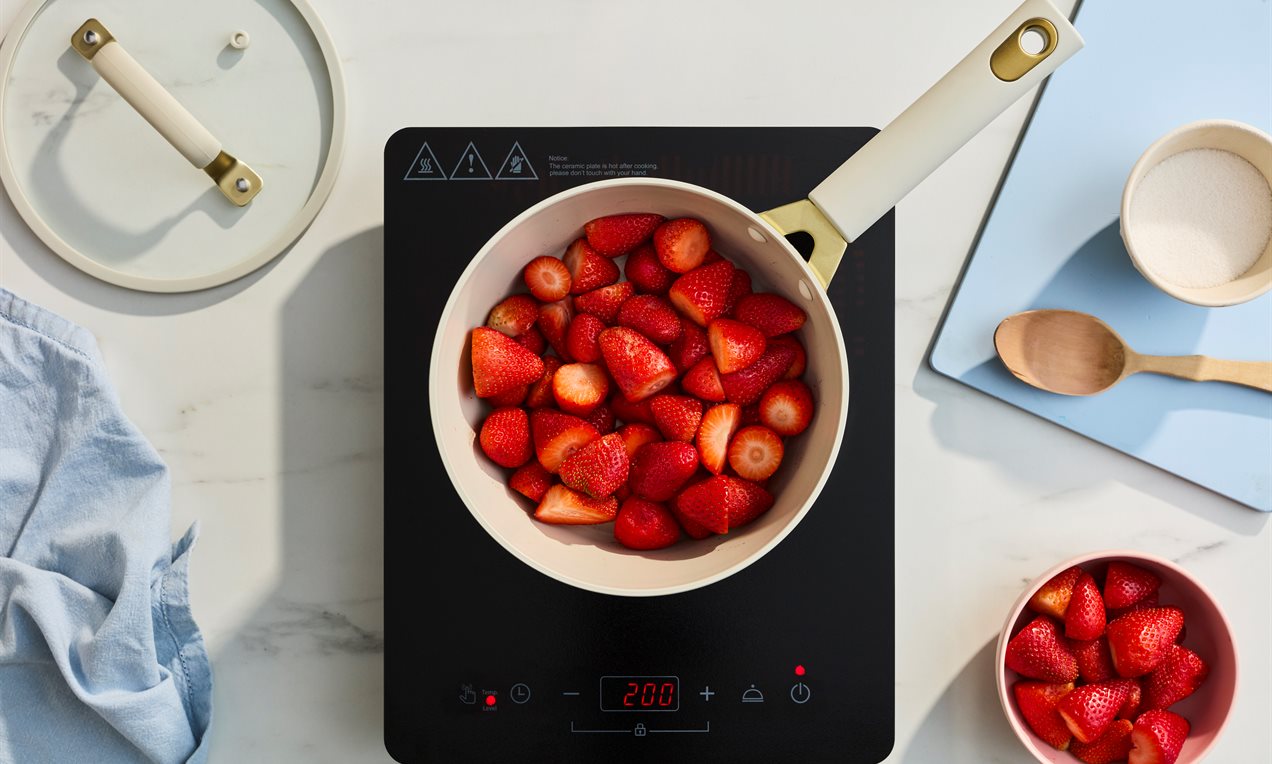
1- Wash fruit thoroughly and remove stems, pits, or skins as needed.
2- Cut larger fruit into small pieces.
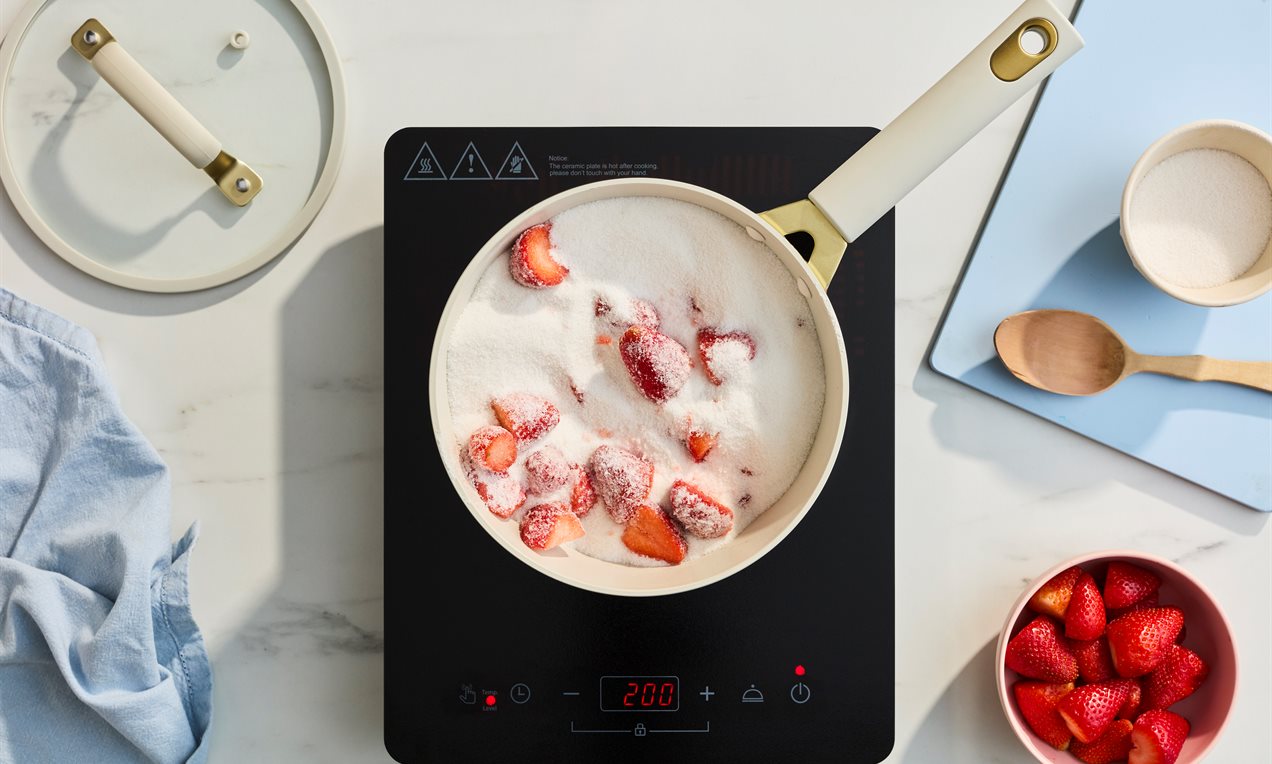
3- Place fruit, sugar, and lemon juice in a large saucepan.
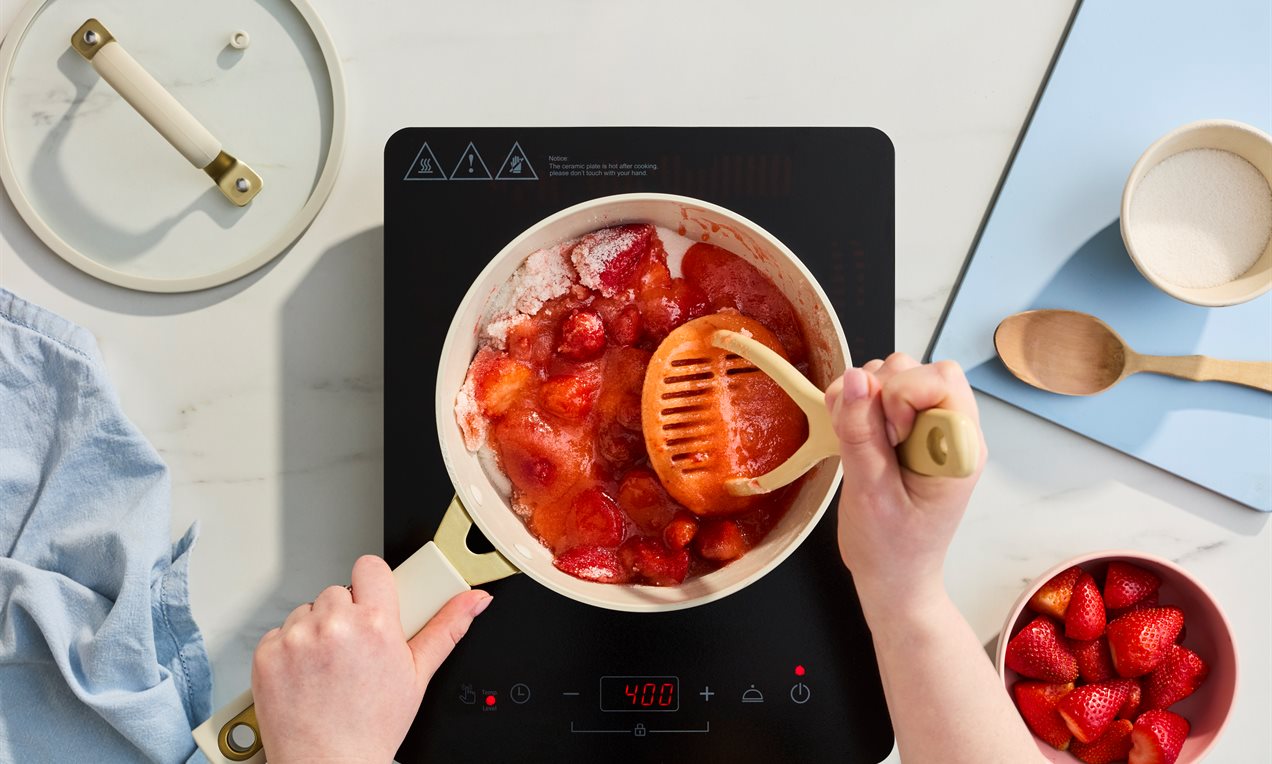
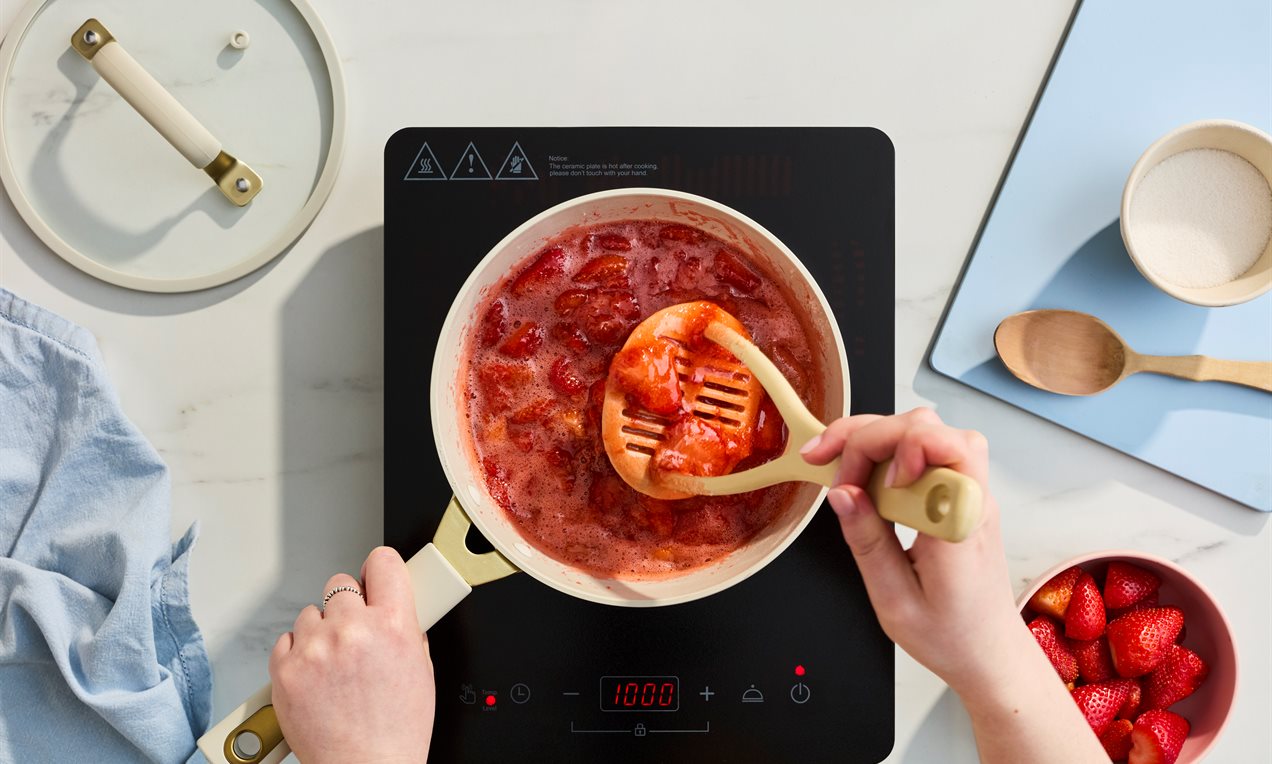
4- Using a masher, mash the fruit and sugar together.
5- Let it sit for 10–15 minutes to macerate (fruit releases juices).
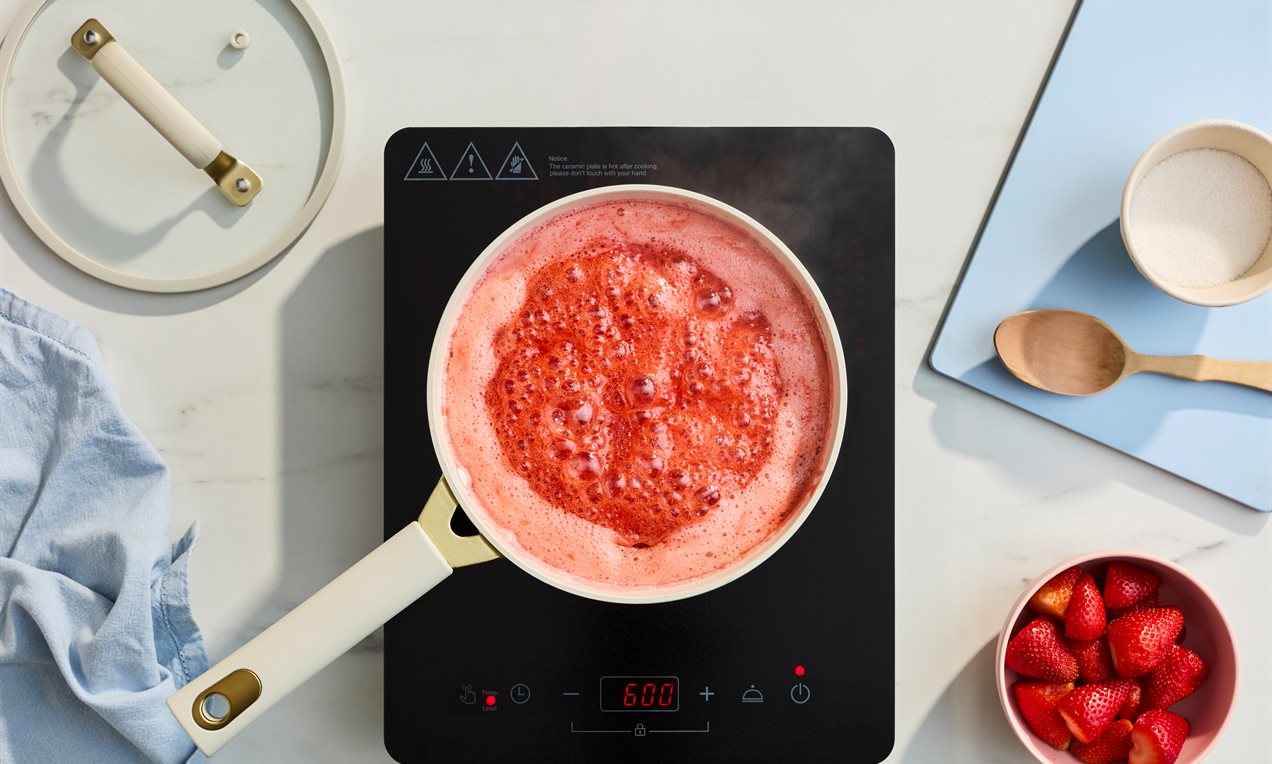
6- Bring mixture to a boil over medium heat, stirring frequently.
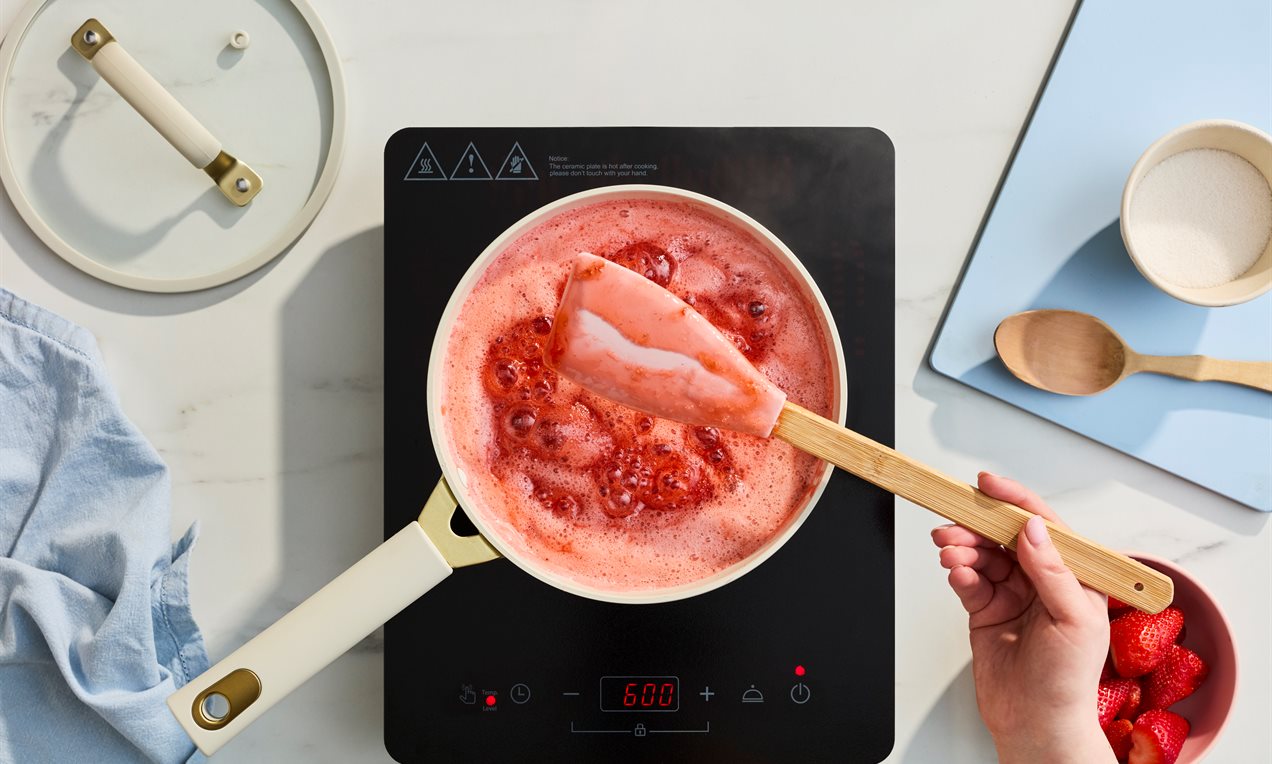
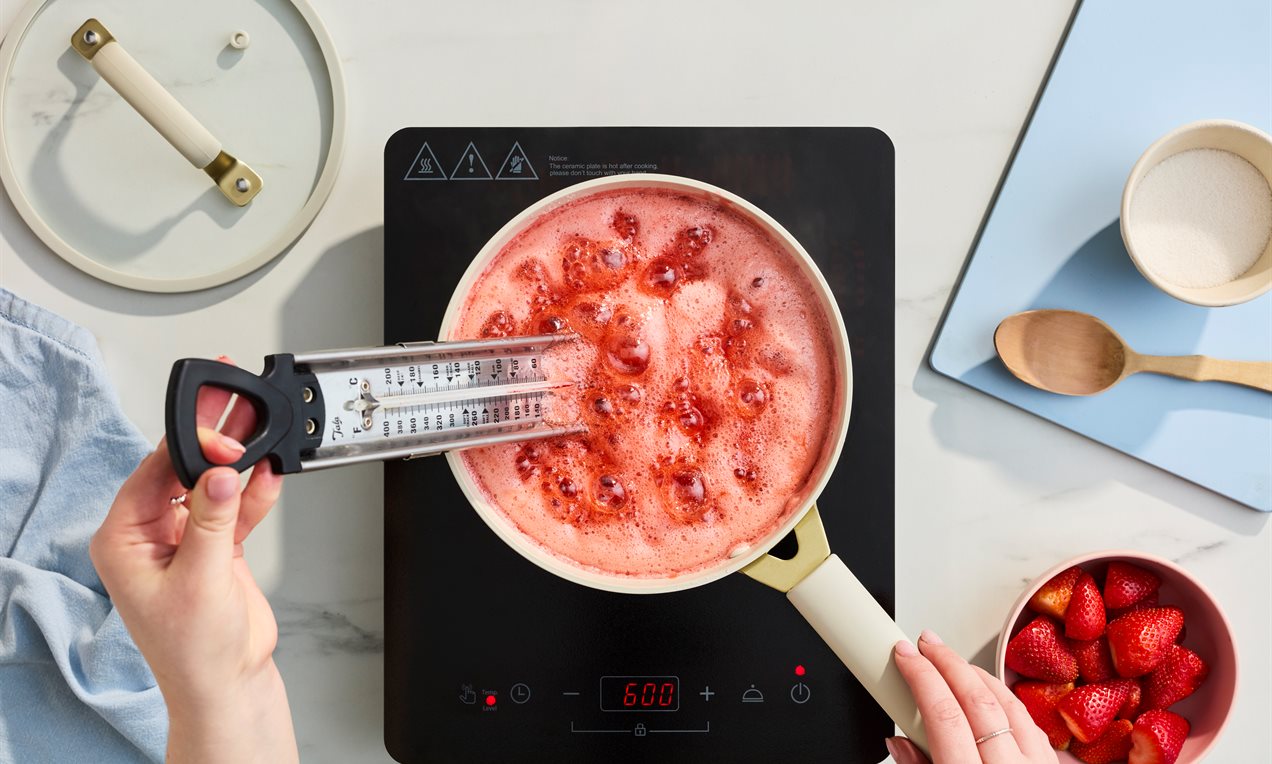
7- Once boiling, reduce to a steady simmer and continue stirring to prevent sticking.
8- Cook until jam reaches setting point:
- Candy thermometer: 105°C / 220°F
- Spoon test- pull the spoon out of the jam, and scoop a line to one side, the mixture should not drip into the line and hold its shape.
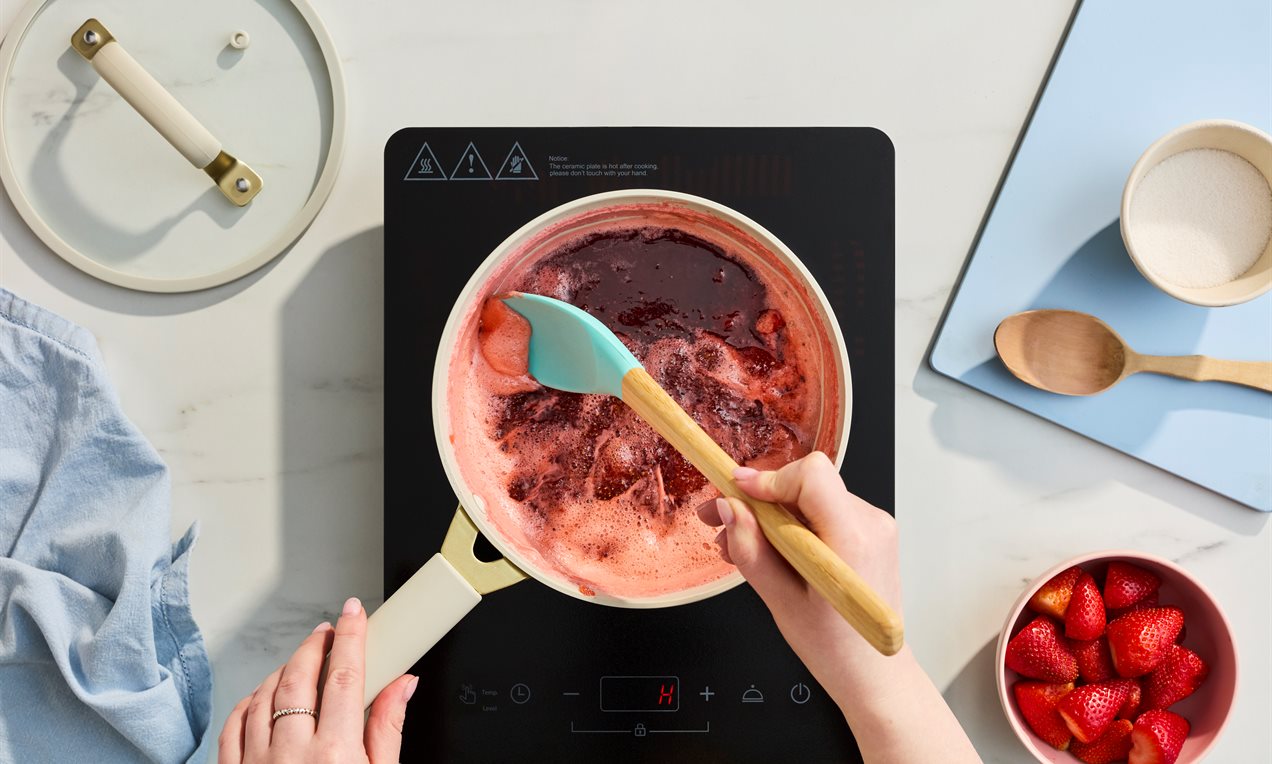
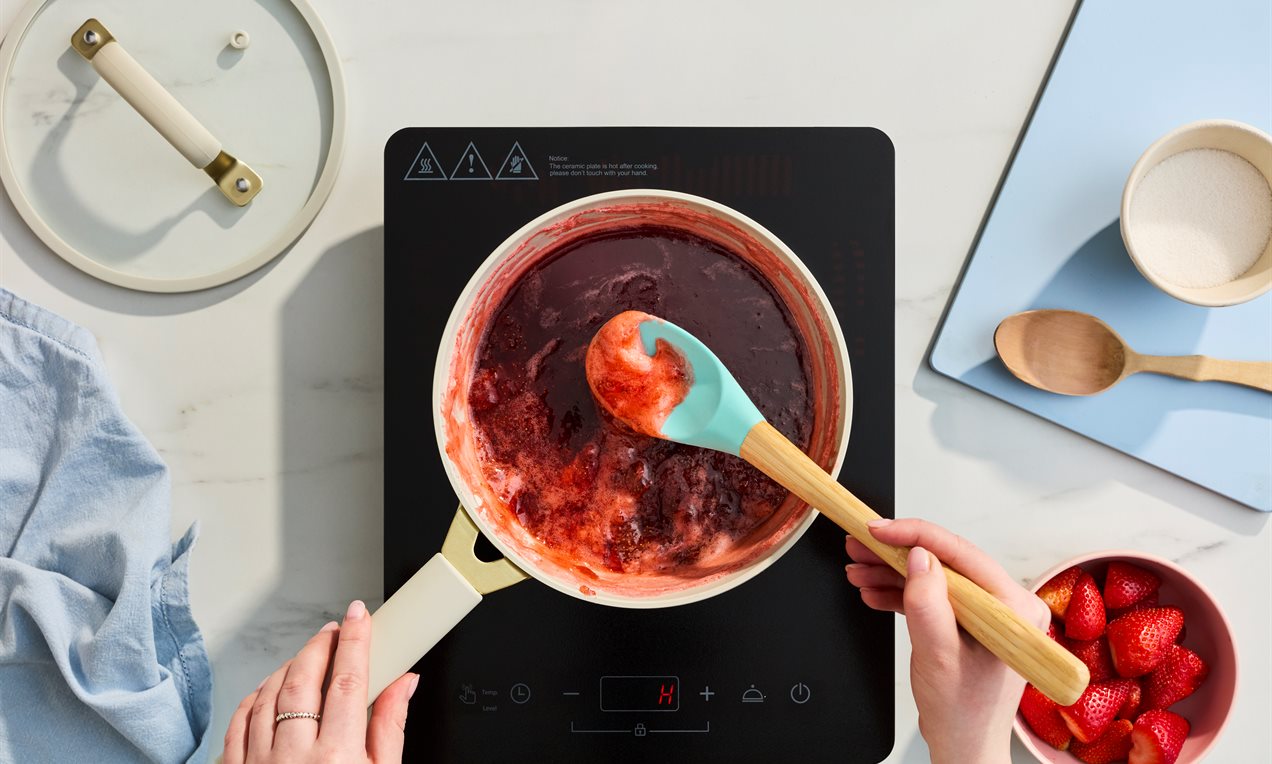
9- Skim off any foam that forms on the surface for a clearer jam.
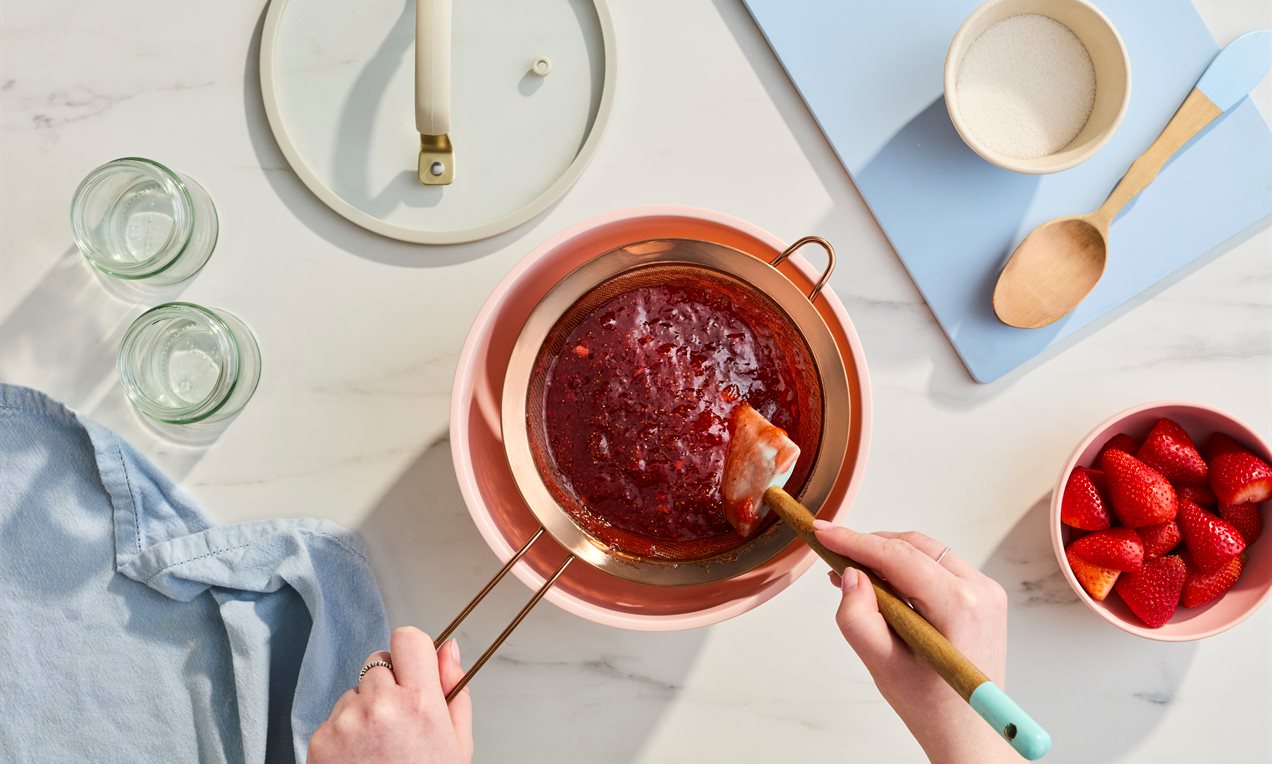
10- If you would like a smoother jam, pass the mixture though a sieve to remove any seeds or lumps.
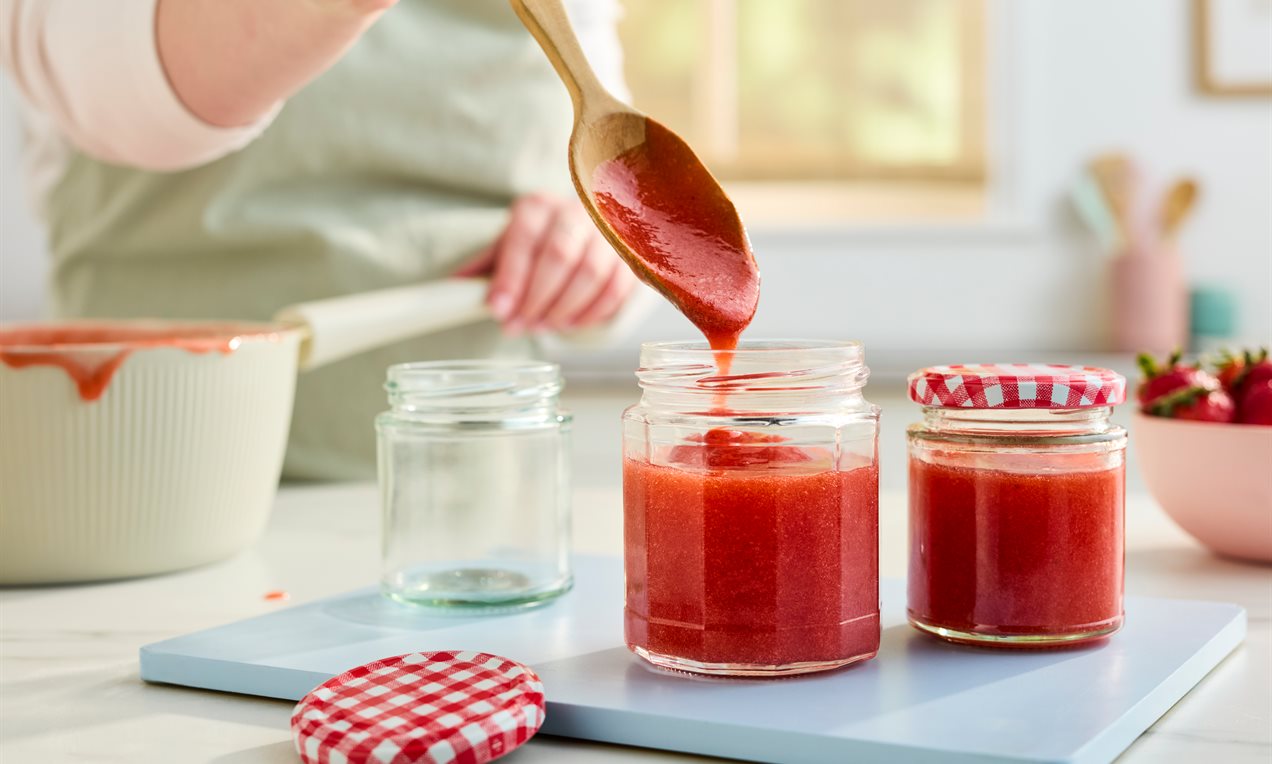
11- Boil jars and lids for 10 minutes or wash in hot soapy water and dry in the oven.
12- Pour hot jam into sterilized jars, leaving about 0.5 cm (¼ inch) headspace. Wipe rims to clean and seal immediately.
13- Let jars cool completely at room temperature.
Storage
- Store sealed jars in a cool, dark place.
- Once opened, refrigerate and use within a few weeks.
- Properly sealed jam can last up to a year.
Hints and Tips for Success
- Taste fruit before adding sugar; adjust sweetness if needed.
- Stir constantly toward the end of cooking to prevent burning.
- Add spices (vanilla, cinnamon, ginger) at the end for subtle flavour.
- If jam doesn’t set after cooling, you can re-boil with a little pectin or more lemon juice.
Common Mistakes to Avoid
- Using under-ripe fruit which will cause a poor flavour and colour.
- Not sterilising or doing it right will cause the jam to spoil quicker.
- Overcooking, is a common mistake, it will cause the jam to become too thick or caramelized.
- Using the wrong pectin/acid or not using it at all, will stop the jam from setting and will be a liquid.
- Using frozen fruit and not balancing it out with more pectin and sugar.
Frequently Asked Questions
What is a Skim Foam?
Some fruits produce white foam as they boil. To make sure you have a clear jam free from the foam you will need to Skim it off for the best results.
Why sterilizing Jars is Important to Store Jam?
Using clean sterilized jars will help prevent spoilage and mould on the jam. You need to make sure that you boil jars in water for 10 minutes or wash in hot soapy water and dry in a hot oven.
Why is Acid Important in Jam?
Adding in lemon juice or citric acid helps to balance out the sweetness and helps the jam to set correctly. By adding in too little acid means the jam may not set properly, and adding in too much may make the jam have an overly tart flavour.
More Handy Baking Tips
Why not check out more hints and tips on Top 10 energy saving tips when baking and What are 7 Most Common Baking Ingredients?
0
Follow Us
Follow Dr. Oetker on Social Media