Our 10 top tips


How to use Dr. Oetker's Decorating Icing
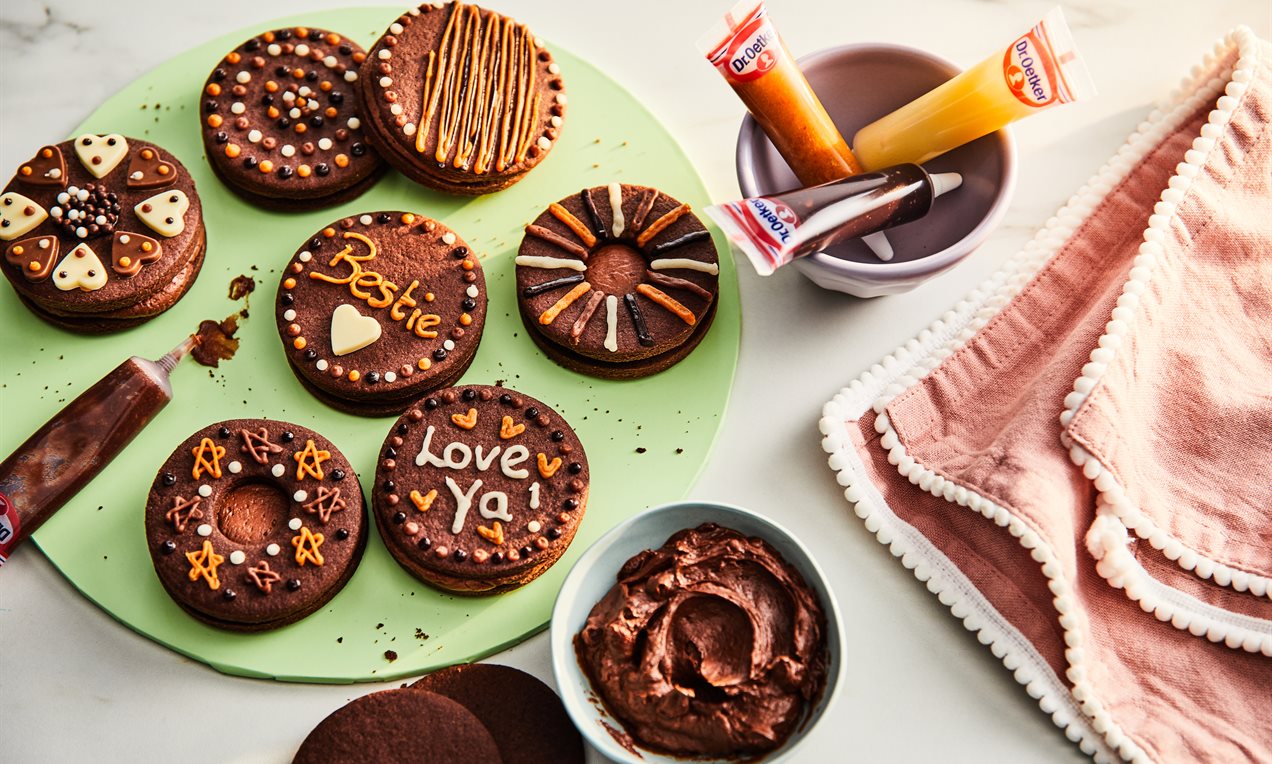
Decorating with icing pens is a fun and easy way to add a personal touch or creative design to your cakes, cookies, and cupcakes

1. Start with the right consistency and temperature. If your icing pen is too thick, it will come out uneven and clog the tip; if it’s too thin, your lines will spread and blur. Icing pens work best when warm, so if room temperature is too cold you can gently knead it in your hands or place warm it in warm water to soften. But remember to dry off with kitchen roll before use, so the water doesn’t drip on your bake.
2. Always test on parchment paper first - before decorating your creations, practice a few lines and shapes, this will help you get a feel for the flow and pressure needed and lets you check for clogs or uneven flow.
3. Keep tip of your Decorating Icing pen clean - icing can build up at the tip and cause blobs or uneven lines. Wipe the tip regularly with a damp cloth or kitchen roll, especially when switching colours or after making a detailed section.
4. Use steady pressure and slow movement - the neatest lines come from a slow, controlled motion with even pressure. Don’t push too hard - the icing will burst out and create blobs, and don’t move too fast, the line will break.
5. Hold the pen like a pencil, this will give you better control for fine details. Make sure to angle the pen slightly downward and keep the tip close to the surface for smooth lines.
6. Always work from the centre of the bake outward when decorating to avoid smudging and to help you keep your design balanced. For intricate designs such flowers or letters, use the same technique - starting in the middle and building outwards.
7. Let each colour dry before adding another - adding a second colour too soon can lead to the colours bleeding into each other. Instead, allow each layer to set for a few minutes to help keep the edges sharp and clean.
8. Use a steady surface to avoid shaking - decorate on a stable, flat surface to prevent wobbly lines. If you need to rotate your work, gently turn the plate or cookie instead of moving the pen around awkwardly.
9. Mistakes are bound to happen, so don’t worry! Most icing can be gently scraped off with a toothpick or clean knife while it’s still wet, for a bigger mistakes, wait for it to dry and then scrape or reapply a clean layer over it.
10. Make sure you store your icing pen properly at room temperature. If your icing pen has a cap, keep it tightly sealed to prevent drying out, if the icing begins to harden, you can sometimes soften it by kneading gently or adding a small drop of warm water.

With a little practice and patience, icing pens can transform simple bakes into beautifully decorated creations. By using the right consistency, keeping your tip clean, working slowly and allowing layers to dry, you can achieve smooth lines and sharp details every time.
Remember, mistakes are part of the learning process. Soon enough, you’ll be confidently decorating like a pro and adding your own personal flair to every cake, cookie, or cupcake you bake!
Recipes
Chocolate Sandwich Biscuits Recipe | Dr. Oetker
Crown Biscuits Recipe | Dr. Oetker
Fossil Cookies Recipe | Dr. Oetker
Coronation Biscuits Recipe | Dr. Oetker
0
Follow Us
Follow Dr. Oetker on Social Media